

3D Model: Mochi Tivi v1.0
Author: Tân Nguyễn
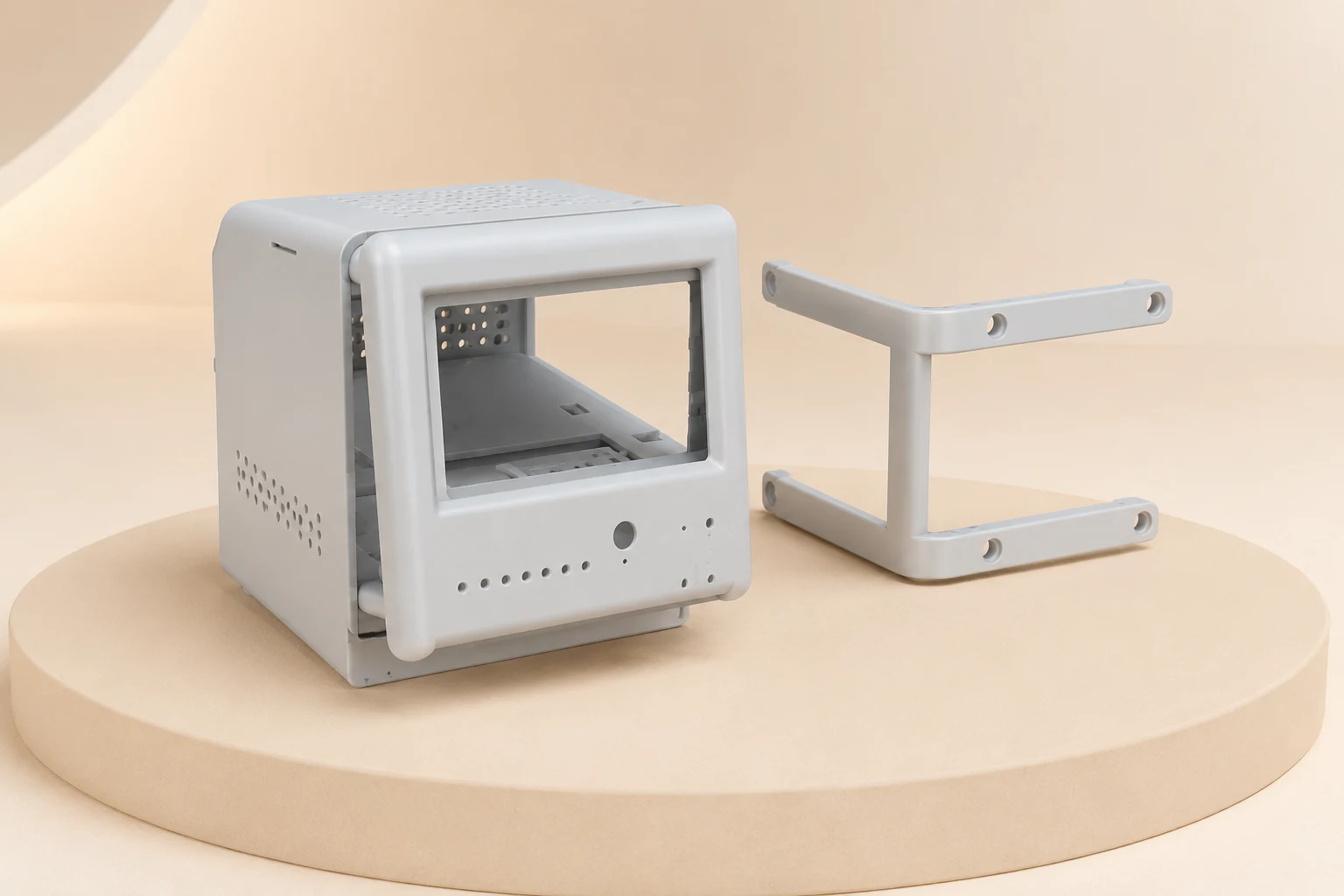
Download the Mochi Tivi v1.0 3D shell with mini TV body, front frame, lid, and base for screen, PCB, and module assembly.
Share
What it is
3D Model: Mochi Tivi v1.0 is a 3D model resource in the Nastrotek library. Download the Mochi Tivi v1.0 3D shell with mini TV body, front frame, lid, and base for screen, PCB, and module assembly. The goal is to give makers and product builders a clear starting point for testing an enclosure shape, decorative part, robot shell, or mechanical idea for a small prototype.
Treat this model as a practical reference file. It is useful for opening in a slicer, checking real dimensions, running a draft print, and studying how a mechanical part handles surfaces, openings, screw points, display windows or internal component space. For Mochi-style robots and small desktop devices, the main value is understanding how the shape supports assembly, maintenance and hardware iteration.
What’s included
- A Design File resource for downloading and evaluating the 3D model in a printing workflow.
- A 3D model preview on the detail page so the form, scale and main surfaces can be inspected before download.
- Practical guidance for checking scale, fit, tolerance and modification risk before treating the model as a finished enclosure.
If the downloadable package contains multiple variants or companion files, keep an untouched original copy before editing. That makes it easier to compare fit, print settings and assembly results between each revision.
How to use
Start by opening the model in a slicer or CAD viewer, then confirm the real-world scale before printing. Check the important mechanical areas first: display opening, screw holes, board space, wire paths, battery cavity and surfaces that may need support. The first print should usually be a draft fit test, not the final cosmetic version.
After the draft print, test it with real electronics or dummy parts that match the final dimensions. Confirm that wires are not compressed, USB access is still possible, the battery can be removed, and the enclosure can be reopened for firmware debugging or hardware changes. A good-looking model that is hard to service can slow down a prototype very quickly.
When customizing the model, change functional details before decorative ones: mounting bosses, wall thickness, speaker vents, connector clearance and cable routing. Once the internal fit is stable, cosmetic changes become much safer.
Compatibility
This resource is best suited to 3D printing tests, product mockups, and form-factor studies for small robots or desktop devices. It should work with common slicer workflows and typical FDM printing setups, as long as you verify scale, orientation, support and tolerance for your own printer.
Do not assume the model is automatically compatible with every display, ESP32 board, battery or audio module. A thicker display, taller connector or different battery can change the assembly quickly. If your electronics stack differs from the reference, use this model as a base for modification rather than a final file for repeated printing.
License/notes
The author/source recorded in metadata is Tân Nguyễn. No standalone license field is declared in the metadata yet, so check the original download page or source notes before commercial use, public redistribution, or adding the files to a shared asset library.
Before sharing a modified version, write down what changed: scale, screw holes, screen position, shell thickness or internal clearance. For mechanical files, a small changelog helps other people understand which version only previews the form, which version fits real hardware, and which version is stable enough to print again.
Related reading
Download Resource
File details & download
- File type
- Design File
- Version
- v1.0
- File size
- Not specified
- Author
- Tân Nguyễn
- Original source
- Open original source · drive.google.com
- License
- Not verified
- Commercial use
- Not verified
- Last checked / updated
- Jul 29, 2026
- Tested by Nastrotek
- Not verified
The license has not been verified. Do not assume this resource is free to reuse, redistribute, or use commercially.
Share
Keep exploring
Read next
Related articles
3D Model: Cassette Player
Download a Cassette Player 3D model kit for Dasai Mochi with OLED screen, touch sensors, ESP32-C3, speaker, shell, and frame parts.
3D Model: Mochi Tivi v2.0
Download the Mochi Tivi v2.0 3D shell with refined core, compact screen frame, M2.5 screw support, and improved prototype stability.
3D Model: Gundam Head
Download a Gundam Head 3D shell for Mochi Robot with angular armor, large visor, mechanical details, and mecha-style customization.